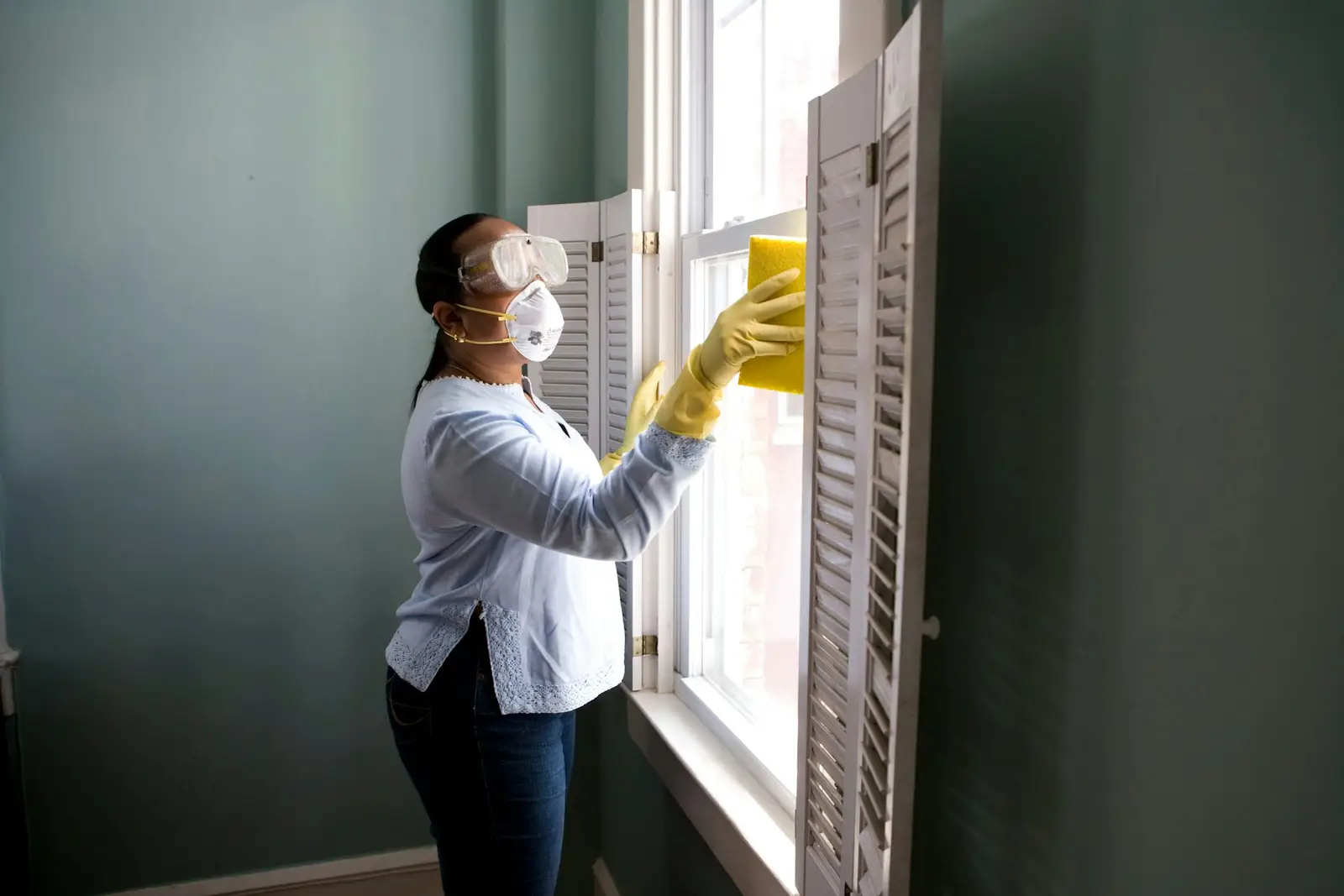
Cleaning older homes in Royal Oak and Ferndale means working with original hardwood, plaster, radiators, and built-ins. Right Key Cleaning covers that housing across Oakland County, MI, including the 1920s bungalows and colonials along those grids. A lot of it was built before 1978, so dust is not always just dust. We are not a lead abatement firm, and this page is the ordinary house clean, including what we leave alone.
Hardwood that has already lived a century
Original floors in these cities are often oak, sometimes patched, sometimes worn at the doorway where winter salt lands. Vacuum first so grit is not ground in. Then damp-mop with a well-wrung mop. A soaking wash raises grain and clouds a finish that may be wax, oil, or an old varnish nobody has identified. If you know the finish, say so. If you do not, we will keep the water light and skip any product you have not approved for that room.
The winter salt and slush problem is sharper here than in a house with new polyurethane. Salt film at the entry and along the baseboard can haze wood that has no modern coating left. Mats and a dry pickup of crystals still come first. We will not flood the floor to chase a white edge.
Plaster walls and the trim around them
Plaster moves. It cracks at corners, bulges where a key has let go, and hides under paint that may be several layers thick. Dust those walls. Wipe smudges with a light hand. Do not scrub a soft spot until the paint skins off, and do not dig at a crack to “clean” it. Wood trim, window stools, and picture rail collect dust on the flat. A dry cloth, then a barely damp one, is the sequence. We will not scrape stickers off plaster and hope the paint stays.
Built-ins are part of the same care. Bookcases, window seats, and dining-room cabinets in Royal Oak and Ferndale were often finished in place. Dust the shelves. Wipe rings if they lift with a mild damp cloth. Do not use a stripper, a scouring pad, or a puddle of oil soap on a finish you want to keep. Tell us which cabinet interiors are in scope. A deep cleaning can include empty shelves. A recurring visit dusts the faces and the open display, and it does not empty your dishes every week.
Radiators, grilles, and the dust they hold
Cast-iron radiators and old floor grilles hold a surprising amount of dust, pet hair, and the lint that heat pulls up. The clean is mechanical: a brush in the fins, a vacuum on the loose dust, and a wipe on the exterior metal. We do not pour water into a radiator, take the sections apart, or paint over rust. If a cover is screwed down or a valve looks fragile, we leave it and say so.
Reachable return grilles get the same dry pass. We do not open the furnace, change filters, or claim the ductwork is clean because the grille looks better. In a pre-1978 house, that limit matters. Household dusting is not paint removal. Sanding, scraping, or cutting into old paint is renovation work, and it sits under the federal Lead Renovation, Repair and Painting rule. That rule is for firms that disturb painted surfaces. It is not a cleaning checklist, and we do not perform abatement.
What we will clean, and what a remodel is
Maid service in these houses is the repeating version once the heavy film is gone: kitchen, baths, floors, and reachable dust, with notes about the wood and the plaster saved on the visit. The first appointment is often the deep clean, because baseboards and radiator fins are not a maintained week. After that, the interval can be weekly or biweekly like any other Oakland County home. The layout is the difference: narrower stairs, more trim, and fewer “wipe it all with one product” surfaces.
If the house is in the middle of a remodel, stop and book that work separately. Drywall dust and paint sanding are not a bungalow maintenance visit. The page on post-renovation cleanup in Birmingham and Bloomfield Hills describes that dust, and the same boundary applies in Royal Oak and Ferndale. We still will not scrape paint. If someone has already disturbed pre-1978 paint, ask the contractor how the renovation rule was handled. Our visit does not certify the house as lead-safe.

Tell us the city, the approximate era if you know it, which floors are original, and any room where the finish is failing. Pets and salt traffic belong on the note too. We bring supplies, and we will use a product you set out for a specific floor. Request a quote with that description so the estimate matches the trim.
Questions people ask first
Are you a lead abatement firm for pre-1978 homes in Royal Oak or Ferndale?
No. Right Key Cleaning is not a lead abatement firm. We dust, wipe, and clean floors. We do not scrape, sand, or remove paint. The EPA renovation rule applies to firms that disturb painted surfaces in pre-1978 housing. If a remodel is creating that dust, book it as a renovation clean and ask the contractor about the rule. A house clean does not certify a home as lead-safe.
How do you clean original hardwood, plaster, and radiators?
Hardwood is vacuumed, then damp-mopped with a well-wrung mop so old wax, oil, or varnish is not soaked. Tell us the finish if you know it. Plaster and built-ins get a light wipe, not a scouring pad. Radiators are brushed in the fins, vacuumed, and wiped on the outside. We do not pour water into them or take them apart. The finish should still be the one you started with.