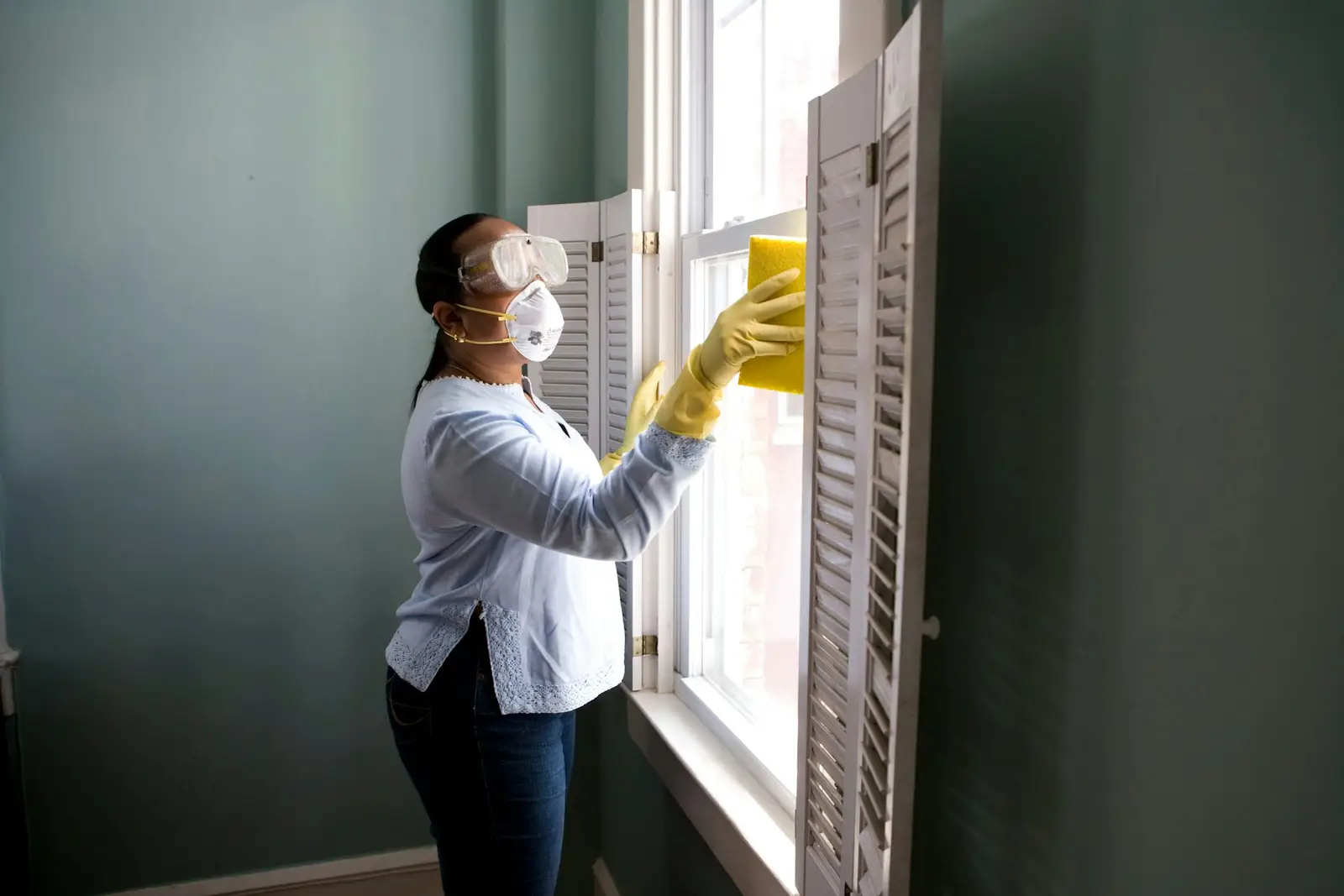
Right Key Cleaning does post-construction cleaning in Oakland County, MI after remodels and new builds, once the heavy debris is gone. The job is fine dust: the film on sills, inside cabinets, in vents, and along the top of trim that a broom leaves behind. It is a final clean, not a rough clean, and it is not a dumpster run.
Rough clean versus final clean
A rough clean is the contractor’s work. It means hauling scraps, sweeping the bulk of the dirt, and leaving a space that can be walked. We do not remove large debris, leftover flooring stacks, or bags of drywall offcuts. If those are still in the rooms, the final clean is premature. A final clean assumes the trades are done enough that we are not wiping a sill that will be sanded again tomorrow.
The final clean is methodical and slow on purpose. Dust is wiped from the top down so it is not knocked onto a floor we already finished. Tracks, hinge sides of doors, the inside of new cabinets, and the ledges over windows are where drywall dust hides. Vents and returns are vacuumed. Bath fixtures are polished of compound and sticker residue. Floors are vacuumed and then damp-mopped, often more than once, because the first pass only lifts the top layer.
Dust, older houses, and lead-safe context
A lot of Oakland County remodels happen in houses built before 1978. Sanding paint in those homes is a lead question, and the household rule of thumb is the EPA Lead Renovation, Repair and Painting program. We are not your lead renovator and we do not certify the contractor’s containment. If dust from a pre-1978 remodel is the reason you called, tell us the age of the house and whether the contractor followed a lead-safe setup. We clean visible dust. We do not claim to abate lead.
Large remodels in Birmingham and Bloomfield Hills are a common call, especially where a kitchen and two baths were opened at once and the dust traveled into rooms that were supposed to be sealed. Post-construction cleaning in Birmingham and post-construction cleaning in Bloomfield Hills describe those houses. Estate-scale homes near Cranbrook have more rooms for dust to settle in, which is a time issue, not a different method. Condo renovations near Somerset Collection in Troy have the opposite problem: dust in a tight unit, plus a building that does not want drywall film in the hallway.
After the final clean
Once the dust is actually gone, ongoing care is either deep cleaning on a household rhythm or commercial cleaning if the space is an office that just finished a build-out. Do not start a weekly maid visit the same day as a final construction clean and expect the weekly slot to include the dust. The final clean is the project. The recurring visit is what happens after you move the furniture back.
The longer local note is post-renovation cleanup in Birmingham and Bloomfield Hills. Read it if you are trying to decide whether the contractor’s “broom clean” is enough before a photographer or a closing.

How to schedule it
Send the city, the type of project, the number of baths and finished rooms, and the date the trades expect to be out. Add whether the kitchen cabinets are installed and empty. Cleaning inside cabinets full of hardware packs is wasted motion. Power and water need to be on. If the HVAC ran during sanding, say so, because the returns will be part of the visit and the furnace filter is yours to replace.
We quote after we understand the stage of the job. A “quick dust” request on a house that was sanded yesterday is a final clean whether or not the subject line says quick. Photos of the kitchen and one bedroom help us see the film. They do not replace an honest note about debris still on site.
New builds and remodels also differ at the fixtures. A new bath still wearing manufacturer stickers is a residue job. A renovated 1920s bath is a dust job on top of older tile that should not be scratched by a scraper. Tell us which one you have. If painters are returning for punch-list touchups, wait. Wiping a room the day before another sanding visit only feels productive. The clean that counts is the one after the last trade has left the house, including the punch-list carpenter who promised to be quick and was not.
Questions people ask first
When should post-construction cleaning be scheduled?
Schedule the final clean after the trades have stopped sanding and the bulky debris has been hauled away. A clean done between drywall and paint will be repeated, and you would be paying twice for the same film. The best window is when cabinets are in, fixtures are set, and nobody is about to cut another hole in the drywall.
What's the difference between a rough clean and a final clean?
A rough clean removes the obvious scraps and leaves the space broom-swept. That is the contractor’s stage, and we do not replace it. A final clean removes fine dust from top to bottom, including tracks, cabinet interiors, vents, and fixtures, then vacuums and mop-washes the floors. If scraps and offcuts are still in the rooms, the job is still in the rough stage.
How do you deal with fine drywall dust on vents and ledges?
Fine dust is wiped and vacuumed from the top of the room downward so it is not redistributed. Ledges, door tops, window tracks, and the inside of vents and returns are part of that pass. Floors are vacuumed before they are mopped, because a wet mop on drywall dust makes a paste. One pass is rarely the last pass on a heavy sanding job.
Do you remove large debris?
No. Large debris, leftover materials, and construction trash are the contractor’s responsibility. We start when that material is gone and the remaining problem is dust, stickers, and residue. If you still have piles of offcuts, reschedule the final clean. Walking a dump run into a dusting appointment shortchanges both.